Fall at Mount Rainier feels different from almost anywhere else in Washington. Summer crowds begin to thin, crisp mountain air settles over the valleys, and the landscape shifts from deep evergreen to shades of gold, orange, and red. On clear days, the first dusting of snow on Mount Rainier makes the autumn colors below look even more dramatic.
For travelers looking for a quiet mountain escape, Mount Rainier in fall can be one of the best times of year to visit. September often combines comfortable hiking weather with changing foliage, while October brings cooler temperatures, richer fall colors, and a much cozier atmosphere around the mountain.
It is also an easy destination to turn into a weekend getaway from Seattle, Tacoma, Olympia, or even Portland. Spend the day exploring trails and waterfalls, then return to a private cabin surrounded by forest for a hot tub soak and a slow evening away from the city.
Here is what to know about visiting Mount Rainier in September, October, and throughout the fall season.
Is Fall a Good Time to Visit Mount Rainier?
Yes. For many visitors, fall is actually one of the most rewarding seasons to explore Mount Rainier National Park.
Summer gets most of the attention, but an autumn trip to Mount Rainier has several advantages. There are generally fewer visitors than during peak summer weekends, temperatures are cooler for hiking, and the changing vegetation adds an entirely different character to familiar landscapes.
Fall is especially appealing if your ideal mountain getaway combines outdoor activities with downtime. Instead of trying to fit as many hikes as possible into a single day, you can take a scenic drive, walk a shorter trail, stop at waterfalls, and leave enough time to enjoy your cabin afterward.
The season is also highly dynamic. Conditions at higher elevations can change quickly, so the experience in early September may be very different from late October.
When Do Fall Colors Peak at Mount Rainier?
There is no single guaranteed date for peak fall colors at Mount Rainier.
Elevation, temperature, rainfall, and early snow all influence when vegetation changes. As a general pattern, autumn color begins appearing in September and becomes increasingly noticeable through late September and early October.
Higher-elevation areas may change earlier, while lower valleys can retain autumn color later into the season.
Visitors looking specifically for Mount Rainier fall foliage should therefore think in terms of a color window rather than one perfect weekend.
Mount Rainier in September
September at Mount Rainier often provides a balance between summer accessibility and the beginning of autumn.
Early September can still feel relatively summery during the day. As the month progresses, nights become colder and fall colors become increasingly visible.
This makes September a particularly good choice for travelers who want to hike while still experiencing the first signs of fall.
Searches such as Mount Rainier September weather, Mount Rainier in September, and best time to see fall colors at Mount Rainier often come from visitors trying to catch this transition period.
If hiking is a major part of your trip, September is usually worth considering before colder and less predictable weather arrives.
Mount Rainier in October
By October, the atmosphere changes considerably.
Mount Rainier in October can mean misty forests, colorful valleys, cold mornings, dramatic clouds, occasional snow at elevation, and much quieter roads than during peak summer.
It is one of the most atmospheric times for a romantic Mount Rainier getaway.
However, visitors should be flexible. Mountain weather can change rapidly, and seasonal services, roads, and trails may be affected by conditions.
Always check current National Park Service alerts, road status, and weather forecasts before leaving for the park.
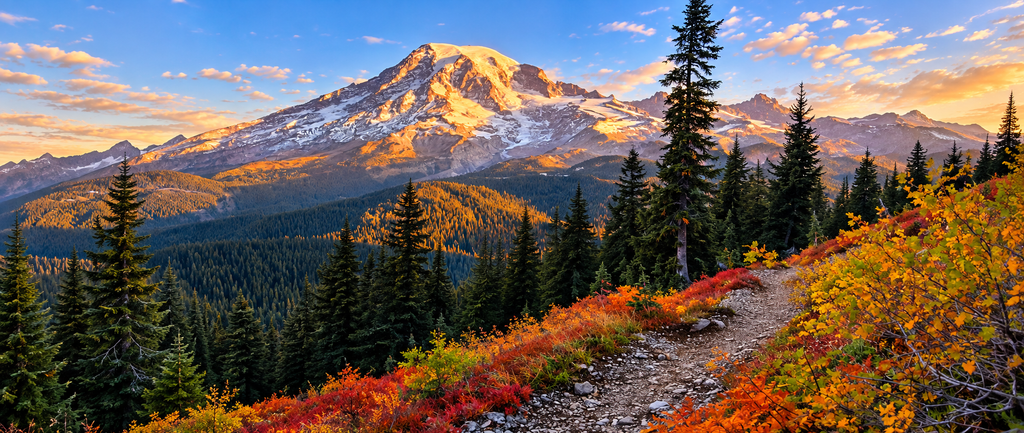
Where to See Fall Colors at Mount Rainier
You do not need to complete a strenuous hike to enjoy fall colors at Mount Rainier.
Some of the best autumn scenery can be found along roads, around visitor areas, beside rivers, and on relatively short trails.
Paradise
Paradise is one of the most famous areas of Mount Rainier National Park for good reason.
On clear days, the mountain dominates the landscape. During fall, the surrounding meadows and vegetation can add reds, oranges, and golds beneath the increasingly snowy peak.
Even if you are not planning a long hike, the drive and shorter walks around Paradise can make the trip worthwhile.
Longmire
Longmire offers a completely different fall experience.
Instead of open alpine scenery, expect dense Pacific Northwest forest, historic buildings, moss-covered trees, and paths that feel particularly atmospheric on cool or rainy autumn days.
For travelers entering through the Nisqually Entrance, Longmire is also a natural stop on the way toward Paradise.
Nisqually Entrance and the Road to Paradise
The drive itself can become part of the experience.
Traveling from Ashford through the Nisqually Entrance takes you through forested sections of the park before gradually climbing toward higher elevations.
In fall, the contrast between evergreen forest, deciduous color, rivers, waterfalls, and snowy mountain scenery can be spectacular.
It also makes Ashford a convenient base for travelers who want easy access to the southwest side of Mount Rainier.
Best Fall Hikes at Mount Rainier
The best fall hikes at Mount Rainier depend heavily on weather, trail conditions, elevation, and your experience level.
Instead of choosing a trail only because it appears on a “best hikes” list, check current conditions before setting out.
That said, several areas are especially popular during autumn.
Skyline Trail
The Skyline Trail at Paradise is one of the park’s signature hikes.
When conditions cooperate, hikers get expansive mountain views, alpine scenery, and opportunities to see autumn vegetation.
The full route can be demanding, particularly when weather changes, so visitors looking for a more relaxed day can explore shorter portions around Paradise instead.
Myrtle Falls
For travelers searching for easy hikes at Mount Rainier, the walk toward Myrtle Falls is a popular option when accessible.
It offers classic Rainier scenery without requiring an all-day hike, making it particularly useful for a relaxed couples weekend.
Grove of the Patriarchs Area and Low-Elevation Forest Walks
Lower-elevation forest experiences offer another side of autumn at Mount Rainier.
Even when higher elevations are cloudy or cold, walking through old-growth forest can be a memorable part of the trip.
Trail and area closures can change, however, so current NPS information should always take priority over older travel guides.
Narada Falls
Narada Falls is another worthwhile stop along the road toward Paradise.
It works particularly well as part of a flexible fall itinerary because you can combine scenic viewpoints, waterfalls, and short walks rather than committing the entire day to one long trail.
A Perfect 2-Day Mount Rainier Fall Itinerary
If you are coming from Seattle, a 2-day Mount Rainier itinerary allows you to experience much more than a rushed day trip.
Day 1: Seattle to Mount Rainier
Leave Seattle in the morning and travel toward Ashford.
After reaching the Mount Rainier area, enter through the Nisqually Entrance and explore Longmire before continuing toward Paradise if road and weather conditions allow.
Depending on conditions and your energy level, spend the afternoon hiking, photographing fall colors, or visiting scenic stops along the route.
Then return to Ashford rather than driving all the way back to Seattle.
This is where the pace of the trip can change completely.
A fall weekend at Rainier is even better when the evening is part of the experience: forest outside the window, a private hot tub, a fireplace, and nowhere else you need to be.
Day 2: Slow Morning and More Rainier
There is no need to start before sunrise unless you want to.
Enjoy a slower morning before returning to the park for another trail, waterfall, scenic drive, or photography stop.
This structure also gives you flexibility. If clouds hide the mountain on your first day, you have another opportunity the following morning.
After exploring, return toward Seattle in the afternoon or evening.
For couples, this makes Mount Rainier feel much more like a genuine weekend vacation than a long day trip.
What Is the Weather Like at Mount Rainier in Fall?
Mount Rainier fall weather can be unpredictable.
September may bring sunny afternoons, but temperatures can drop significantly at night. By October, rain, fog, freezing temperatures, and snow at higher elevations become increasingly possible.
Elevation matters enormously.
Weather in Ashford does not necessarily tell you what conditions will be like at Paradise. A comfortable day near your cabin can coincide with snow or strong wind higher on the mountain.
For that reason, fall travelers should prepare for several types of weather during the same trip.
What to Pack for Mount Rainier in Fall
A good Mount Rainier fall packing list should focus on layers and changing conditions.
Consider bringing:
- waterproof outer layers;
- warm mid-layers;
- comfortable hiking shoes or boots;
- extra socks;
- hat and gloves, especially later in the season;
- water and trail snacks;
- portable charger;
- offline maps;
- sunscreen and sunglasses;
- a change of clothes for after hiking.
If you are staying overnight, bring comfortable clothes for your cabin as well. Few things feel better after a cold fall hike than changing into dry clothes before spending the evening somewhere warm.
What to Do at Mount Rainier When It Rains
Rain does not automatically ruin a Mount Rainier weekend.
In fact, a rainy fall day can create some of the most characteristic Pacific Northwest scenery: mist between the trees, saturated autumn colors, rushing waterfalls, and fog moving through the forest.
On wet days, consider shorter forest walks, waterfall stops, scenic drives where conditions permit, and time around Longmire rather than committing to a long exposed hike.
And this is one reason staying overnight can be so worthwhile.
If you planned only a day trip from Seattle, bad weather can dominate the entire experience. With a cabin nearby, you can wait for conditions to change and make the rainy part of the day part of the getaway.
Where to Stay Near Mount Rainier in Fall
For access to the southwest side of Mount Rainier, Ashford, Washington is one of the most convenient places to stay.
It sits near the Nisqually Entrance, making it possible to spend your days exploring the park without turning every outing into a long commute.
But location is only part of the decision.
Fall is the season when the accommodation itself matters.
After hiking through cold mountain air, your evening can be just as memorable as the trail. A private hot tub, fireplace, forest surroundings, and quiet adults-only environment transform an overnight stop into a proper mountain retreat.
For couples looking for that experience, Stormking Cabins & Spa near Mount Rainier offers private cabins in the forest near the Nisqually Entrance, making it easy to combine days in the national park with slower evenings in Ashford.
Instead of treating lodging simply as somewhere to sleep, build it into your fall itinerary.
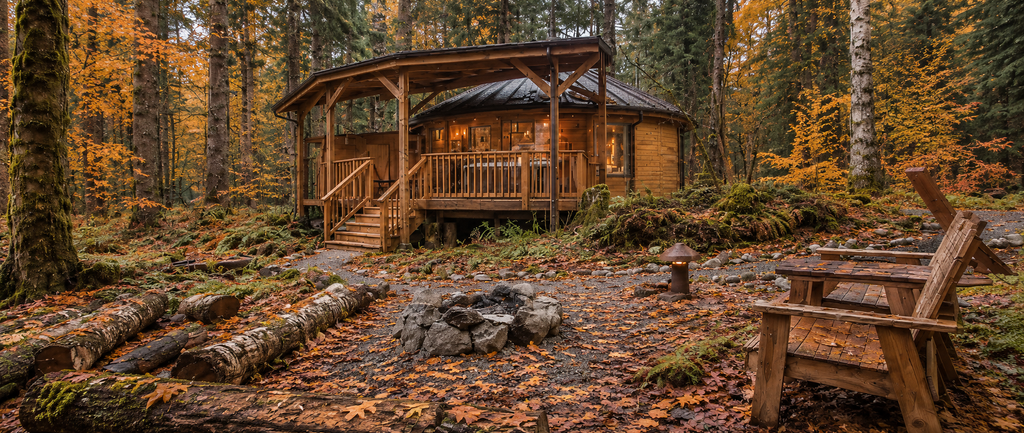
Romantic Fall Getaway at Mount Rainier
Mount Rainier is also an excellent alternative to more traditional romantic fall getaways in Washington State.
You do not need an elaborate itinerary.
A simple weekend can include a scenic drive from Seattle, a few hours exploring the park, lunch or dinner around Ashford, an evening in a private hot tub, and another short adventure the following morning.
For anniversaries, birthdays, spontaneous weekends, or simply a few days away together, the combination of mountains and privacy works especially well in fall.
And because the scenery changes throughout the season, September and October can feel like two completely different trips.
Mount Rainier Fall Weekend From Seattle
For Seattle residents, one of the biggest advantages is distance.
You can leave the city and transition from urban surroundings to forest and mountain scenery within the same day, which makes Rainier particularly attractive for fall weekend getaways from Seattle.
Instead of spending much of a short vacation flying or navigating airports, the drive becomes part of the trip.
This also makes Mount Rainier suitable for shorter escapes:
- one-night romantic getaway;
- two-night weekend trip;
- anniversary weekend;
- spontaneous fall road trip;
- hiking weekend;
- wellness-focused cabin retreat.
For a two-night stay, you can explore without feeling pressured to maximize every hour.
Is Mount Rainier Worth Visiting in Fall?
Absolutely — as long as you arrive prepared for changing mountain conditions.
Summer may offer longer days, but autumn brings its own advantages: colorful vegetation, cooler hiking temperatures, quieter surroundings, dramatic weather, and the unmistakable feeling of the Pacific Northwest shifting toward winter.
September is ideal for travelers hoping to combine hiking with early fall color. October is colder and less predictable, but can deliver an especially cozy and atmospheric Mount Rainier experience.
The key is not to treat the mountain as a checklist.
Take a scenic drive. Walk through the forest. Stop at a waterfall. Watch the weather move across Rainier. Come back to a warm cabin. Spend an evening in the hot tub.
Sometimes the best Mount Rainier fall getaway is the one where you leave enough time to do very little at all.
FAQ About Visiting Mount Rainier in Fall
Is September a good time to visit Mount Rainier?
Yes. September can offer comfortable hiking conditions, fewer crowds than peak summer periods, and the beginning of fall color. Conditions vary by elevation and year, so check current park information before your visit.
Is October a good time to visit Mount Rainier?
October can be beautiful, especially for fall foliage and a quieter mountain experience. However, colder temperatures, rain, fog, and snow become increasingly possible, particularly at higher elevations.
When are the best fall colors at Mount Rainier?
Fall color typically develops during September and into October, but peak timing varies according to elevation and weather. There is no guaranteed peak date.
Does it snow at Mount Rainier in October?
It can. Mount Rainier has significant elevation differences, and snow may occur at higher elevations even when lower areas around Ashford remain snow-free.
How many days do you need at Mount Rainier in fall?
Two days work particularly well for a fall weekend. It gives you more flexibility around weather and enough time to combine hiking and sightseeing with a relaxing evening near the park.
Where should couples stay near Mount Rainier?
Ashford is convenient for couples planning to explore the southwest side of Mount Rainier through the Nisqually Entrance. Private cabins are particularly well suited to romantic fall weekends because the accommodation itself becomes part of the trip.
What should I wear at Mount Rainier in September or October?
Wear layers and bring waterproof clothing. Conditions can vary considerably between lower elevations and areas such as Paradise, so prepare for temperatures colder than those forecast in nearby towns.
Can you visit Mount Rainier on a rainy fall weekend?
Yes. Waterfalls, forests, scenic drives, and lower-elevation walks can still be enjoyable in wet weather when conditions are safe. Staying nearby also gives you more flexibility to adjust outdoor plans around changing weather.